
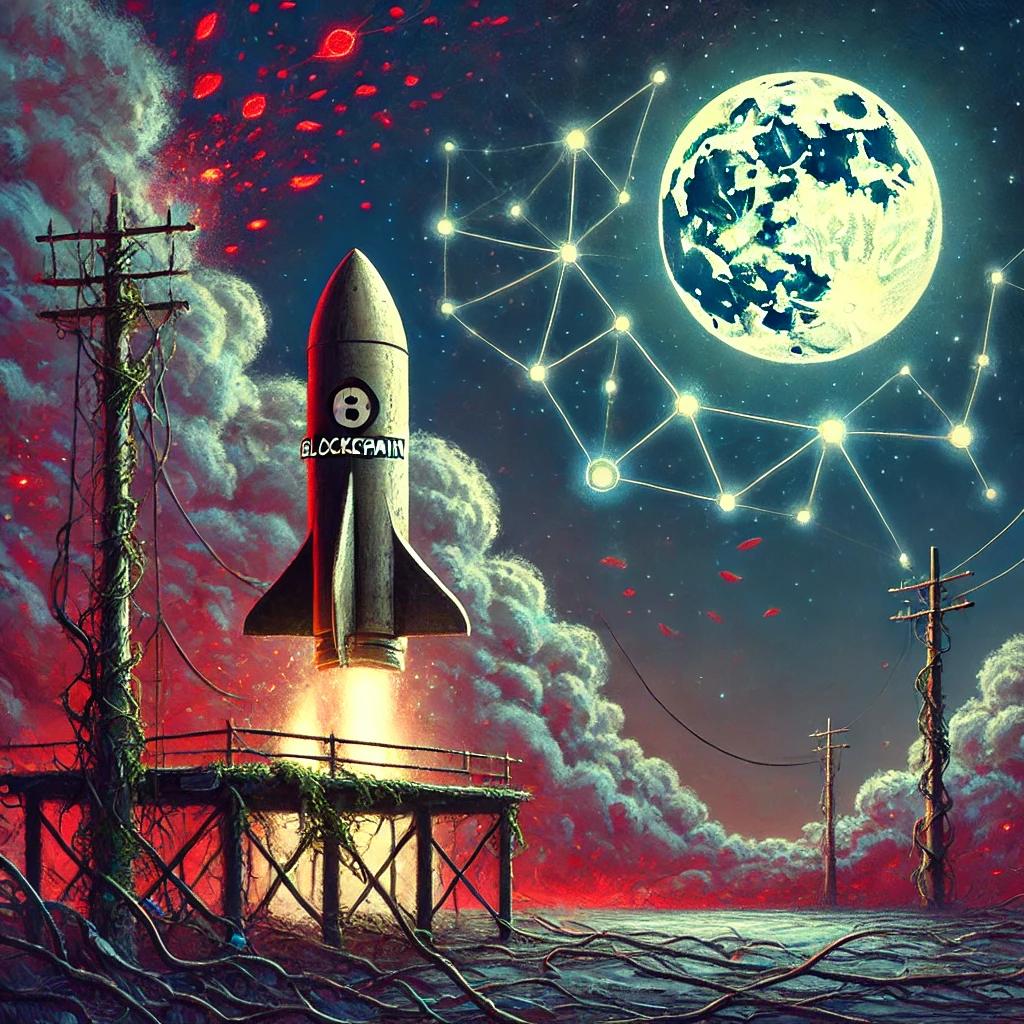
Ten years back, I was skeptical about blockchain. It was 2015–2017, the crypto craze was peaking — Bitcoin soaring, ICOs everywhere — and the noise was deafening. To me, cryptocurrency was just a flashy corner of blockchain, not its heart. I saw a tool for trust, transparency, real problems — supply chains, healthcare, governance — not a lottery ticket. But the world didn’t care; crypto and blockchain blurred into one, and the speculative flood drowned out the signal. Now, in 2025, I’m still asking: where’s the mainstream breakthrough? Blockchain’s wins are real but thin, and its quiet sidestep during humanity’s chaos feels like the biggest hint why.
Where Blockchain Stands: Hits, Not Home Runs
Blockchain’s got traction. Walmart tracks food from farm to shelf, nailing recalls in seconds; Maersk’s TradeLens logs a billion shipping events, greasing global trade. Estonia secures a million patient records; MediLedger guards U.S. drug chains for giants like Pfizer. Sweden and Dubai cut property deal times; Zug in Switzerland votes on-chain; Power Ledger swaps solar power in Australia. These are live — permissioned networks, smart contracts, immutable data — doing real work.
But they’re narrow. Walmart and Maersk own their lanes — food, shipping — but don’t ripple out. MediLedger’s millions of drug checks are vital, yet they’re a silo, not a healthcare fix. Estonia’s 1.3 million people, Sweden’s one-country titles, Zug’s handful of votes, Power Ledger’s small-scale trades — they’re clever, not colossal. Blockchain’s touching millions, not billions, a far cry from the internet’s daily reach. It’s a utility player, not a star.
The Moonshot That Never Launched
Then a global crisis hit — millions dead, economies frozen, trust in tatters — and I thought, “Here’s the moment.” Picture it: a ledger logging cases without fakes, tracing contacts with privacy, tracking vaccines from lab to vein, syncing quarantine rules worldwide. Governments, pharma, hospitals, citizens — billions tied to one clear record. Healthcare could’ve linked to real estate (beds, zones) and supply chains (masks, ventilators). It wasn’t about cash — it was about clarity in chaos, a cause blockchain seemed wired for.
It didn’t happen. Some say the tech wasn’t there — too slow (100 TPS vs. Visa’s firepower), too scattered (no cross-system talk), too clunky to launch mid-storm. I’m not buying it whole. Bitcoin had run since 2009, moving billions by 2020; Hyperledger powered big players; Ethereum had smart contracts. It wasn’t seamless — the vaccine’s mRNA bet was raw too — but we muscled that through. Blockchain could’ve flexed — bugs patched live, scale jury-rigged. Tech doesn’t wait for polish during a crisis; it bends when you push.
What bent instead? Focus. The U.S. shoveled $18 billion into Operation Warp Speed for vaccines; pharma chased the prize; tech CEOs showcased their dance moves on TikTok; Zoom became a global phenomenon; while quick apps ate the spotlight. No one grabbed the reins. The WHO didn’t pitch a global chain; there was no Hyperledger pivot; no one said, “This is it, let’s move.” Dashboards and tracing apps — fast, messy — took over. Blockchain’s chance slipped through the cracks.
The Soul It Started With: People, Not Profits
That cuts deep because blockchain wasn’t built for Walmart or Bitcoin speculators — it was for us. Satoshi dropped Bitcoin in 2008 to dodge banks post-crash — 1.7 billion unbanked could trade free of fees. Ethereum’s Vitalik Buterin, by 2015, saw smart contracts for voting, aid, art — power to the edges, not the top. The cypherpunk pitch was wild: microloans for the poor, elections you can’t rig, IDs for the stateless, food to the starving, artists paid straight, truth crowdsourced, water for the thirsty. A decentralized fix for a rigged game.
The crisis was its proving ground — case data we could trust, vaccines shared fair, relief without red tape. It could’ve been the people’s tech, not a boardroom perk. But by 2020, the script flipped — Bitcoin turned “gold,” Ethereum ran DeFi, the social spark dimmed. TikTok hit a billion users; blockchain’s big swing didn’t.
Conclusion: A Turn Still Worth Taking
So what’s the read? Blockchain’s not stalled — it’s sidetracked. Its wins are solid but small; the crisis showed what it could do, not what it can’t. The $18 billion Warp Speed bet worked — vaccines shipped — but blockchain’s quieter shot never fired. It’s not the tech’s fault; it’s ours. We didn’t lean in.
Its roots — banking the broke, verifying the silenced, feeding the empty — still hum. The crisis was a stage it missed, but the next one’s coming — health, climate, justice. The pieces are there: Bitcoin’s toughness, MediLedger’s precision, a decade’s worth of know-how. It can go mainstream — not for wallets, but for lives — if we nudge it that way. The story’s not done. Why not write the turn ourselves?
