
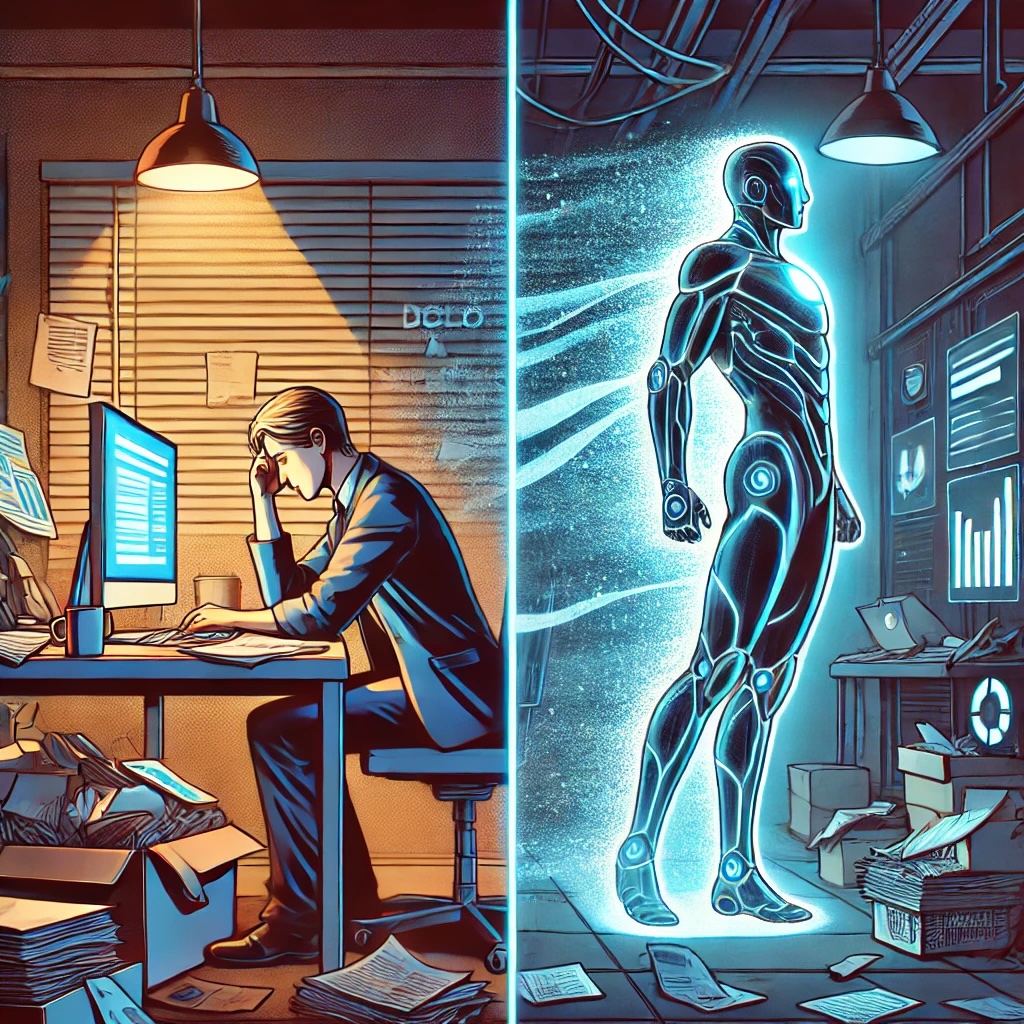
Loneliness for the solo entrepreneur isn’t just quiet desks or empty inboxes — it’s an imposed weight, distinct from the solitude you might choose to focus. It’s the absence of a co-conspirator who gets the stakes, the grind, the 3 a.m. doubts. Unlike unicorn-bound founders who attract investors and mentors once the hype kicks in, the persistent solo entrepreneur stays alone — no flock, no cavalry. You’re the visionary, the executor, and the one who eats the failure, all without a partner in the trenches. It’s not just social isolation; it’s existential. You’re carrying a dream no one else fully owns, and that’s a heavy, peculiar loneliness.
Proof and Peril
This isn’t whining — it’s reality, and the numbers scream it. You feel it when there’s no one to bounce a risky pivot off, no one to share the win, no one to vent to when the bank account’s red. Michael Freeman’s 2018 study found 72% of entrepreneurs face mental health struggles — 30% depression, 27% anxiety, 11.6% suicidal ideation — far outpacing the general population. Solo founders, without a team to lean on, likely take the hardest hit. A 2023 ResearchGate dive into 9,000 Reddit posts dubbed it “deep isolation,” tied to the extreme of going it alone. X posts like @vikaspar_ (March 2025) peg burnout at 23%, anxiety at 58%, depression at 43%. The data doubles down: a 2023 ScienceDirect study linked loneliness to fading passion and higher exit rates — solo founders overrepresented in the “I’m out” crowd. Burnout’s at 34% (Founder Reports 2024), anxiety at 50.2%, and health cracks — stress, depression, even whispers of suicide risk. High-profile cases like Aaron Swartz or Jody Sherman didn’t just fail; they broke under pressures no one shared. The ecosystem’s unicorn obsession — 1% of startups — ignores the 90% failure rate and the solo founders left uncounted. Investors chase the shiny; the persistent solo gets silence. That’s not just personal — it’s an economic blind spot, a disservice to innovation’s backbone.
Coping Mechanisms
The fixes? They’re out there, but they’re flimsy. Coworking spaces buzz with chatter, but it’s surface-level — strangers don’t care about your P&L. Online forums let you vent, yet the replies are from folks too busy with their own hustles to dig in. Mentors drop wisdom, then disappear; peer groups like Entrepreneurs’ Organization feel like staged therapy — helpful, but bounded by everyone’s self-interest. Zoom “water cooler” chats or industry meetups? They’re theater — brief highs before the silence crashes back. These are dressings, not cures. They mask the ache of having no one truly in it with you, and when they fade, the loneliness can hit harder. The persistent solo entrepreneur needs more than a Band-Aid — they need a lifeline these don’t deliver.
The Anchor Syndrome
Call it what it is: the Anchor Syndrome. It’s real, it’s brutal, and it’s ignored. This isn’t the lone wolf thriving in solitude — it’s the solo entrepreneur tethered to their vision, sinking under its unshared weight, aching for a partner to lighten the load. The world magnifies the unicorn glow but dims this struggle — mental health craters, ventures falter, and lives fray while we cheer the exceptions. Recognizing it isn’t pity — it’s honesty. These founders aren’t weak; they’re human, and the burden they bear alone deserves a spotlight, not a shrug. Until we see it, the coping stays staged, and the losses pile up quiet.
What bent instead? Focus. The U.S. shoveled $18 billion into Operation Warp Speed for vaccines; pharma chased the prize; tech CEOs showcased their dance moves on TikTok; Zoom became a global phenomenon; while quick apps ate the spotlight. No one grabbed the reins. The WHO didn’t pitch a global chain; there was no Hyperledger pivot; no one said, “This is it, let’s move.” Dashboards and tracing apps — fast, messy — took over. Blockchain’s chance slipped through the cracks.
AI as Sidekick
Enter AI — not a toy for startup buzzwords, but a relentless teammate for the solo entrepreneur facing the Anchor Syndrome. This isn’t “give me an idea” fluff; it’s dumping a pricing plan — say, $49/month flat — and AI firing back: “Your margins are razor-thin; why not split it into $29 basic, $59 pro? Test it.” It’s a sparring partner that doesn’t flinch, like a coach who spots your weak jab and makes you throw it again, harder. It debates to the tooth, structures chaos, and keeps you from stewing in your own head. With retrieval-augmented generation (RAG), it pulls fresh data — market rates, competitor pricing — to ground you, not parrot stereotypes.
It’s your external brain when the load gets heavy. Decision fatigue — that paralyzing fog of endless choices — gets sliced up; a 2024 HBR piece pegged it as a burnout kingpin, and AI triages fast. Cash flow crunch? It models three scenarios in minutes, not days. Cognitive overload? It holds the threads, cutting “thinking time” in half. Emotional buffering is in play too — not warm fuzzies, but a steady counterweight to doubt. You’ve got a half-formed strategy; AI’s the grindstone — sharpens it or breaks it, no coddling. A 2023 MIT Tech Review clocked 40% productivity gains in small biz with AI — solo founders, with no one else to lean on, could squeeze out more. It’s not human — no beers, no gut-level cheers — but it blunts the isolation, saves time, and keeps you sane enough to hit the gym or breathe.
Tuning the Super
AI’s raw power isn’t enough — human intelligence plus AI makes it super; if either falters, you’re left with super suck. The solo entrepreneur can’t just plug it in and pray; it’s about picking the right beast and forging it from generic to razor-specific. The Gen AI scene’s exploding — ChatGPT, Grok, Deepseek, Anthropic, Claude, Gemini, Llama, and more — each with its quirks. Your success hinges on choosing one and sticking to it, tuning it to be your sidekick, not a scattershot gamble. Start broad: test a few, dump a pricing doc — ChatGPT might gloss over margins, Grok might push hard on logic, Claude might over analyze tone. Pick wrong, and you’re stuck with a pandering bot — apologetic, ego-stroking, hallucinating alongside you, whispering you’re flawless when you’re not. You don’t need a sycophant; you need a partner as resilient and relentless as you are.
Training kicks off with your world: upload that pricing doc, it flags “$49’s tight” — push back, “My niche values simplicity.” It adjusts, learns your voice. Next, a customer email draft; it says “too formal,” you counter, “I need authority” — it shifts, aligns to your tone. Over time, it’s not guessing — it’s anticipating, challenging sloppy spots, easing off where you’re firm. A founder calls their marketing “disruptive”; generic AI nods — tuned AI digs: “Define disruptive — your data shows incremental gains.” It contrasts, fills blind spots. Founders tweaking one model for brutal honesty see productivity soar when it fits. But it’s on you: hop platforms midstream, and you’re retraining from scratch; vague prompts get garbage; no pushback, and it’s a yes-bot amplifying flaws. Done right — pick a horse, ride it through iterations, debates, raw input — it slashes decision fatigue, catches stumbles, and frees bandwidth. A pivot that takes days alone shrinks to hours, leaving room to decompress before burnout bites. Half-ass the choice or the tuning, and it’s a dull blade in a crowded toolbox.
