
In today’s world, technology isn’t just a shiny add-on—it’s the invisible hand picking winners and losers. But you don’t need to be a Silicon Valley titan to come out on top. Every business—from a scrappy landscaping crew to a sprawling oil refinery—can bake tech into its DNA and climb to a higher echelon. This isn’t about consuming tech to survive; it’s about seriously leveraging it to dominate your niche. And the best part? You don’t need a fortune or a tech genius on payroll to start. Here’s how five everyday businesses can transform into the new Tech Company—starting small, iterating smartly, and owning their lane.
The Old Playbook: Consumption Isn’t Enough
Most businesses already dip their toes in tech. The landscaping crew uses scheduling apps and online payments. The bakery blasts emails via Mailchimp. The logistics outfit tracks trucks with GPS. It’s table stakes—like electricity in the 1900s. But here’s the catch: when everyone’s doing it, it’s not an edge; it’s a level playing field. Consuming tech keeps you afloat, but it won’t catapult you ahead. To win, you’ve got to move beyond the basics and wield tech as a force multiplier—something that rewrites your value, not just polishes it.
The New Tech Company: Leverage Over Enablement
So, what’s a Tech Company in this sense? It’s not about coding apps or pivoting from your core—it’s about using tech to amplify what you already do best, pushing you into an upper echelon your rivals can’t touch. Think a landscaping crew turning yards into optimized ecosystems with drones and AI, not just mowed patches. Or a bakery predicting demand with weather data and smart algorithms, not guessing daily batches. This is tech woven into their DNA, not tacked on as a checklist. Below, we’ll explore what’s possible for five businesses, then lay out the lean, iterative path to get there.
Landscaping Crew: From Grass to Ecosystems
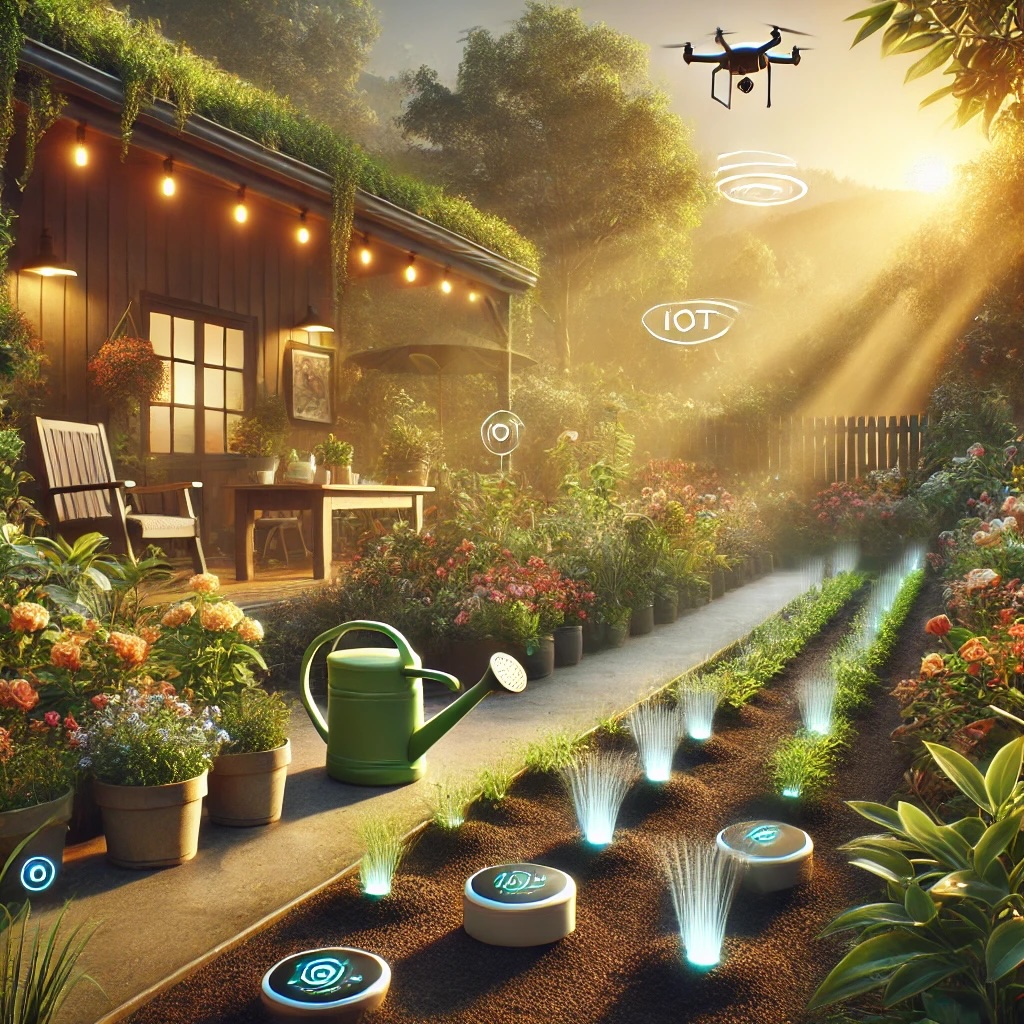
What’s Possible: Imagine a landscaping crew that doesn’t just mow and mulch but masters yards as living ecosystems. IoT sensors could track soil and sunlight, AI could optimize plant health, and drones could map 3D designs—offering precision care that saves water, boosts curb appeal, and locks in eco-conscious clients at premium rates. Tech doesn’t replace the shovel; it elevates their craft into a league of its own.
- Crawl: Snag a $30 soil sensor and a free app (Blynk) to monitor one yard’s moisture. Log it in a Google Sheet, tweak watering, and pitch it as “smart yard care” to a loyal client.
- Walk: Add a few more sensors ($100 total) and a free dashboard (Google Data Studio). Optimize irrigation across jobs, saving water and upselling eco-smarts for a premium.
- Run: Reinvest in a $500 drone and open-source AI (TensorFlow) to map and analyze plant health. Offer 3D designs via free AR tools. You’re the high-tech landscaper rewriting the game.
Bakery: From Bread to Brilliance
What’s Possible: Picture a bakery that doesn’t just bake but predicts. By blending weather data, foot traffic, and AI, they could nail daily demand—more sourdough on rainy days, less waste on slow ones. Add personalized offers via a slick app, and they’re not just a shop; they’re a data-driven tastemaker outsmarting chains and charming regulars with uncanny precision.
- Crawl: Pull free weather data (OpenWeatherMap) into a spreadsheet. Test if rain boosts pastry sales, then bake accordingly to cut waste.
- Walk: Add a $50 foot-traffic counter and sync it to a free tool (Google Analytics). Pair with weather trends to nail staffing and batches. Tweak a recipe for the win.
- Run: Use a low-cost AI platform (Google Colab) to predict demand from sales, weather, and local events. Push offers via a no-code app (Glide, $30/month). You’re the baker who owns demand.
Logistics Outfit: From Hauls to Heroes
What’s Possible: Envision a logistics crew that doesn’t just drive but dominates. With AI predicting traffic before it snarls, telematics slashing fuel costs, and real-time ETAs delighting customers, they could turn deliveries into a science. Tech doesn’t replace the trucks—it makes them unstoppable, beating deadlines and margins in a game of inches.
- Crawl: Track one truck with a free GPS app (Google Maps Timeline). Cross-check with traffic data to dodge a delay—manual, but effective.
- Walk: Add $30 OBD-II dongles to a few trucks, monitoring fuel via a cheap app (Torque). Reroute with free traffic APIs (TomTom) to save time and gas.
- Run: Scale to fleet telematics ($20/month per truck, Samsara) and basic AI (AWS SageMaker) for proactive routing. Add ETAs to a customer app (Bubble). You’re the logistics ninja.
Oil Refinery: From Barrels to Brainpower
What’s Possible: Think of an oil refinery that doesn’t just process crude but outsmarts the market. A digital twin could optimize every valve and mix, tweaking output to chase high-margin fuels based on live prices. Blockchain could trace carbon footprints, branding them “greener” for regulators and buyers. Tech turns a commodity player into a strategic powerhouse.
- Crawl: Stick a $50 Raspberry Pi sensor on a pump, feeding a free dashboard (Grafana). Catch wear early and avoid one costly fix.
- Walk: Expand sensors to a line ($300) and use free ML (Google Colab) to predict maintenance. Tweak a process with market data for a yield bump.
- Run: Build a mini-digital twin (AnyLogic, $1,000/year) to optimize output. Add blockchain (Hyperledger, free) for carbon tracking. You’re efficient and “green.”
Sustainable Hardwood Flooring: From Wood to Wonders
What’s Possible: Imagine a flooring company that doesn’t just sell planks but pioneers smart, eco-luxury. Sensors in the wood could track wear and moisture, feeding an app that advises upkeep. AI could optimize sustainable sourcing, while generative design crafts bespoke patterns. They’d be a high-tech, green leader, not just a supplier.
- Crawl: Map a supplier with free GIS (QGIS) and deforestation data. Log sourcing in a Google Sheet, pitching an “eco-batch” to one buyer.
- Walk: Add a $50 moisture sensor to a test floor, syncing to a free app (Blynk). Optimize sourcing across suppliers for cost and emissions.
- Run: Scale sensors ($500) and AI (TensorFlow Lite) to predict wear, feeding a client app (Glide). Design custom patterns with free 3D tools (Blender). You’re smart and green.
The DNA Shift: Making It Real
This isn’t a moonshot—it’s a mindset with a lean playbook:
- Micro-Start: Spend $50-$150 on a cheap tool (sensor, API, app) tied to your core. Use free platforms to test fast—no big bets.
- Prove the Win: Target one result—less waste, happier clients, lower costs. Takes days, not years. No tech army required.
- Skill Up Cheaply: Lean on your team’s curiosity—YouTube or a $20 course beats hiring experts. Tech chops grow as you tinker.
- Snowball Cash: Reinvest small gains into the next step—more sensors, better tools. Stay cash-flow positive.
- Iterate Smart: Let feedback drive you. If it flops, pivot; if it works, scale.
The Upper Echelon Beckons
The new Tech Company doesn’t ditch its roots—it supercharges them with tech baked into its DNA. The landscaping crew masters ecosystems. The refinery outsmarts markets. These businesses don’t just consume tech—they leverage it to rewrite their story. Start small, iterate relentlessly, and soon you’re not just surviving—you’re ruling. In a world where tech crowns the victors, this is how you claim your throne.
